
Advanced certification · European CASPs
CAPS.Certified Anti-Money Laundering Principal Specialist

Develop the expertise to lead a crypto AML function.
Build your knowledge of governance, risk and controls for European crypto-asset service providers, with practical casework and assessment.
Online · Self-paced · In English
Not sure this is your level? Take the free AML check
- CPD hours
- 60Principal-level learning
- Assignments
- 14Apply specialist knowledge
- Recommended weeks
- 5–6Plan your learning
- Entry requirements
- ReviewEligibility review required
What you will develop
Knowledge with
a working purpose.
- Compliance Programs : Master the development and implementation of comprehensive compliance frameworks, including KYC, CDD, EDD, and transaction monitoring.
- Blockchain and Cryptocurrencies : Gain a thorough understanding of blockchain technology, its core principles, and the various types of cryptocurrencies, including tokens, stablecoins, NFTs, and CBDCs.
- Regulatory Mastery : Understand the European Union AML/CTF+ regulatory approach, focusing on CASP-specific obligations under the European legal framework.
- Cybersecurity in AML/CTF+ : Master cybersecurity unique to CASPs, including incident response, penetration testing, and managing IT vulnerabilities in crypto environments.
- Crypto Industry Focus : Explore risks unique to the cryptocurrency sector, such as honeypot, tokenisation, and other CASP-specific risk areas.
- Practical Application : Solve real-world case studies to apply advanced AML/CTF+ concepts in managing risks and responding to regulatory challenges.
The programme syllabus
A clear route through
the subject.
14 chapters · Expand a chapter to explore the topics.
How you study
Study online at your own pace. Work through the reading materials and assignments, apply your knowledge to crypto AML casework, then take the final examination.
01Introduction to Anti-Money Laundering and Counter-Terrorist Financing
- Predicate offences for Money Laundering, Terrorist Financing,
- Proliferation Financing and Sanctions
- Understanding Money Laundering, Its Consequences and Its Impact
- Understanding Terrorist Financing, Its Consequences and Its Impact
- Understanding Proliferation Financing, Its Consequences and Its Impact
- International Sanctions: Importance and Why
- Highlights of the previous chapters
02Introduction to blockchain
- Historical Context
- Core Principles of Blockchain
- Challenges and Considerations
- Key Elements of Cryptocurrency Transactions
- Highlights of the previous chapters
03Overview of various types of cryptocurrencies, including native assets, tokens, stablecoins, NFTs and CBDCs
- Virtual Assets, Cryptocurrencies and Crypto-Assets
- Native Assets
- Tokens
- Stablecoins
- Central Bank Digital Currencies
- Highlights of the previous chapters
04CASP AML/CTF+ Framework in European Union
- EU-wide regulation development
- European Union Regulation Development
- CASP’s Obligations Under the EU framework
- AML/CO responsibilities
- Highlights of the previous chapters
05CASP different services in Regulation Development
- Virtual Currency Service
- Virtual Currency Wallet Service
- Virtual Currency Exchange Service
- Virtual Currency Transfer Service
- Tokenisation
- Over-The-Counter Desk
- Market Making
- Online Gaming
- Crypto ATM’s
- Highlights of the previous chapters
06Compliance Program
- Key elements of an Effective Compliance Program
- Roles and Responsibilities in Compliance
- Compliance Policies and Procedures
- Training and Awareness Programs
- Highlights of the previous chapters
07CASP Risk Management,- Assessment and – Appetite
- Risk Management, – Assessment, and – Appetite
- Risk-, Rule-Based Approach
- ML/TF+ Risk Identification
- AML/CTF+ Risk Scoring
- Examples of Risk Assessment Scenarios and Best Practices
- Highlights of the previous chapters
08KYC, CDD, EDD, ODD, Transaction monitoring
- KYC
- CDD, SDD, EDD
- ODD
- Transaction monitoring
- Highlights of the previous chapters
09Cybersecurity Risks
- Cybersecurity and AML/CTF+
- Incident Response
- Penetration Testing, Black-box, White-box Audits
- Key Aspects of IT Risks in Cryptocurrencies
- Automated technology and systems in AML/CTF+
- Highlights of the previous chapters
10GDPR Requirements within AML/CTF+
- Understanding GDPR and its Importance
- GDPR Compliance in AML/CTF Programs
- Data Subject Rights and AML/CTF+ Obligations
- Ensuring Data Privacy and Security in AML/CTF+ Operations
- Case Studies and Best Practices
- Highlights of the previous chapters
11Suspicious Activity and/or Transaction
- Investigating Suspicious Activity
- Identifying Suspicious Activity and/or Transaction
- Red Flag Indicators Related to Transactions, Transaction Patterns and Anonymity
- Red Flag Indicators About Senders or Recipients; In the Source of Funds or Wealth; Geographical Risks
- Highlights of the previous chapters
12Reporting obligations
- Principles of the tone from the top and information flow
- Reporting obligation from Employees to the AML Department
- Communication by Employees/MLRO on Towards to Customer
- Reporting From the AML Department to FIU
- General Reporting to the Management Board
- Highlights of the previous chapter
13Audit
- The importance of the AML/CTF/IS compliance function as a prerequisite function for the internal audit
- Blockchain Preparation Audit Programme
- Audit
- Highlights of the previous chapters
14Consequences of Non-compliance with AML/CTF+ Regulations
- Enforcement Actions and Penalties for AML/CTF+ Violations
- Utilisation of Non-Compliant Cryptocurrency Exchanges by Criminals for Money Laundering
- Case Studies – Penalties
- Highlights of the previous chapters
Know what
the programme involves.
Learning format, assessment and the entry requirements for this pathway.
What You’ll Learn in the CAPS Certification Program
The CAPS Certification Program for European Union CASPs is designed for professionals aiming to master anti-money laundering (AML), counter-terrorism financing (CTF), and other critical financial crime prevention strategies. This advanced program goes beyond intermediate knowledge, providing in-depth insights into AML/CTF+ compliance, regulatory frameworks, and risk management practices in the European Union crypto sector.
The program equips learners with the knowledge and skills to address complex compliance challenges, ensuring organisations uphold the highest standards of financial integrity.
The program is compliant with the ESMA’s guidelines for the criteria on the assessment of knowledge and competence under the Markets in Crypto Assets Regulation (MiCA) of 11 July 2025.
What Does the CAPS for European Union CASPs Program Cover?
This comprehensive certification program offers expertise in the following areas:
- Advanced Understanding of Financial Crime Risks. Explore the intricate mechanisms behind financial crimes, including money laundering, terrorism financing, and proliferation financing, and understand their global impact.
- Blockchain and Cryptocurrencies: Core principles of blockchain technology, types of cryptocurrencies, and their regulatory implications.
- European Union Regulatory Framework and Approach: Detailed insights into EU’s AML laws, CASP obligations under the EU legal framework, and the role of compliance officers.
- Risk Management: Advanced risk assessment techniques, identifying red flags, and practical strategies for mitigating ML/TF risks.
- Compliance Program Development: Building effective compliance systems, including KYC, transaction monitoring, and governance structures.
- Cybersecurity in AML/CTF+: Addressing IT risks, data privacy under GDPR, and leveraging technology for compliance.
- Reporting and Audits: Best practices for suspicious activity reporting, internal audits, and ensuring readiness for regulatory scrutiny.
- Consequences of Non-Compliance: Real-world case studies highlighting enforcement actions, penalties, and lessons learned.
Learning Experience
The CAPS Certification Program combines advanced expertise with an engaging learning experience, featuring:
- Dynamic Video Lectures: Professionally created content to explain complex topics clearly.
- In-Depth Case Studies: Real-world examples to contextualise theoretical knowledge.
- Interactive Quizzes: Test and reinforce your understanding throughout the course.
- Customised Materials: Jurisdiction- and industry-specific guides for practical application.
Program Duration and Format
- Learning Method: Online.
- Duration: 5-6 weeks (flexible, self-paced).
- Materials: Video lectures, detailed textual content, industry-specific case studies, and schemes.
- Final Assessment: Comprehensive exam with 60 questions, 90 minutes to complete.
- Exam passing threshold: 80%
What are the requirements for a student who wants to take CAPS?
- Basic computer and internet skills.
- Knowledge of English at least B2.
- Professional experience in the field at least 4 years.
- Higher education and other high-level professional qualifications.
Contact us to find whether you are eligible.
Before your
final exam.
Review the exam instructions and applicable retake conditions in your learning platform before starting.
- Independent work
- This is independent, closed-book work. No AI assistants, course materials, external references or help from another person.
- Confidential content
- Keep questions, scenarios and answers confidential. Do not copy, photograph, screenshot or share examination content.
- One timed sitting
- Plan for one timed sitting. Check the exam instructions for the time limit, permitted breaks and retake conditions.
Programme completion and certificate issuance follow the applicable assessment requirements.
Recognition & certificate verification AML Active
Keep learning. Keep the evidence.
Practical tools, live expert sessions and a record of your continuing development.
Optional membership, separate from your qualification. It never changes the status of a certificate you hold.
Explore membership- Tools for your work
Explore risk. Find original sources. Understand the pattern.
- Live learning and CPD
Learn and connect with an average of 150 professionals per session.
- A short course, each year
One included course credit.
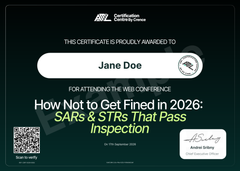
An experience of studying CAPS.
Feedback on the former Lithuanian CAPS programme, shared in May 2025.
Frequently asked questions
Find the details you need to plan your learning.
Choosing the programme
How does CAPS differ from CASS?
CASS develops specialist AML knowledge across the function. CAPS focuses on principal-level responsibilities in the European crypto-asset sector, including governance, risk, controls and casework. It is intended for experienced professionals leading or deputising within an AML function.
What are the entry requirements?
The programme specifies at least four years of relevant professional experience and a recognised AML qualification or equivalent professional recognition. Eligibility is reviewed before enrolment. Send your experience and qualifications to the programme team if you are unsure whether your background meets the requirements.
Request an eligibility reviewDoes CAPS qualify me for appointment as an AML officer?
Completing CAPS provides a record of assessed learning. It does not itself appoint you to a role, authorise a business or guarantee acceptance by an employer or regulator. Appointment decisions depend on the applicable requirements and the individual’s wider experience and competence.
Read about recognitionLearning and assessment
How is CAPS delivered, and how long does it take?
The programme is online and self-paced, with reading materials, assignments and casework. Five to six weeks is the recommended learning timeline. Plan your study around your experience, professional commitments and revision needs.
Explore the curriculumWhich language is the EU pathway taught in?
The EU CAPS pathway is taught and assessed in English, and the certificate is issued in English. You should be comfortable studying financial-crime and regulatory terminology in English.
How does the final examination work?
The published programme specification describes an online examination with 60 questions, a 90-minute limit and an 80% pass threshold. Review the current assessment instructions and progression requirements before beginning.
See programme requirementsWhat happens if I need another exam attempt?
Ask the programme team to confirm the current retake allowance, waiting period and charges before enrolling. The applicable conditions are also provided with the examination instructions.
Ask about assessmentFees and access
What does the fee cover?
Request the current programme offer before booking. It should identify the learning materials, assessment, credential, payment schedule and any separately charged attempts or services. Team and sponsored places can be discussed with the Centre.
Request programme detailsWhat does lifetime access include?
Where lifetime access is offered, it covers the programme edition you purchased for as long as the Learning Platform operates. Future editions and regulatory refreshes are separate from that purchase. Necessary corrections remain included. The Learning Platform Terms explain access and updates.
Read the access termsWhat support is available while I study?
Contact us for help with your learning account, enrolment or questions about the programme. If you need an accessibility arrangement or have a question about using the platform for an exam, discuss it with us before enrolling.
Contact learner supportCan my employer pay or enrol a team?
Yes. Tell us the programme, participant numbers and the learning records your organisation needs. The team can discuss enrolment, invoicing and delivery arrangements before you book.
Discuss team learningAdvanced certification
CAPS.
Develop the expertise to lead a crypto AML function.
Eligibility reviewBefore you enrol
Entry is subject to an eligibility review.
Discuss programme requirements before enrolling.
Ask about eligibility, programme fees and the next steps.
Advanced certification
CAPS.
Develop your team’s knowledge and judgement.
Learning for your team
Discuss participant numbers, access and your learning needs.
Request a team quotePlan learning around your team’s responsibilities.